
1910
Corvallis High School opens in a building at the present location of the city's Central Park. It will remain there until 1935, when the school moves to a new building constructed a half-mile north and west on 11th Street. |
|
1910
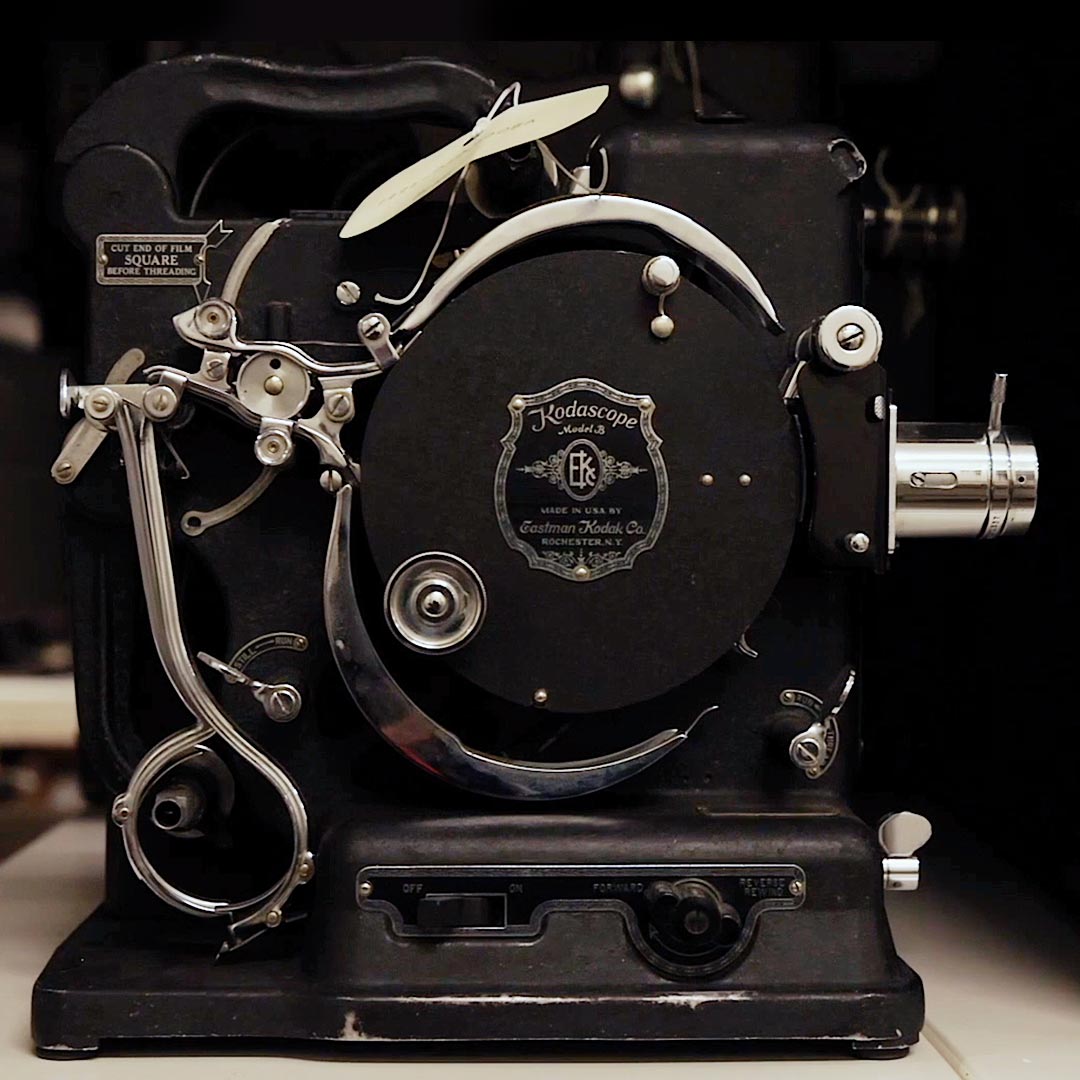
By 1910, Corvallis can boast of three movie theaters, the Palace Theater on north Second Street, the Star Theater, and the Idlewild Theater. |
|
1910
The Palace Theater advertises for the first time in the Weekly Gazette-Times newspaper. It is located on north Second Street and operated by Small and Whiteside. |
|
1910
OAC's McAlexander Fieldhouse is constructed. |
|
1910
OAC uses "Beavers" for the first time as a reference to its athletic teams. |
|
1910
Nolan's Department Store moves into the Harding Building. It is the first major retailer to move from Second Street to Third Street. Nolan's advertises, "It pays to walk a little farther." |
|
1910
Gus Harding builds a large commercial building on the northwest corner of Third and Madison streets, which becomes the cornerstone of what will become the Third Street business district. |
|
1910
Between 1910 and 1920, the Corvallis business district expands from Second Street west to Third Street. As this happens, most of the wood-frame commercial buildings remaining on Second Street are demolished and replaced with masonry buildings. |
|
1910
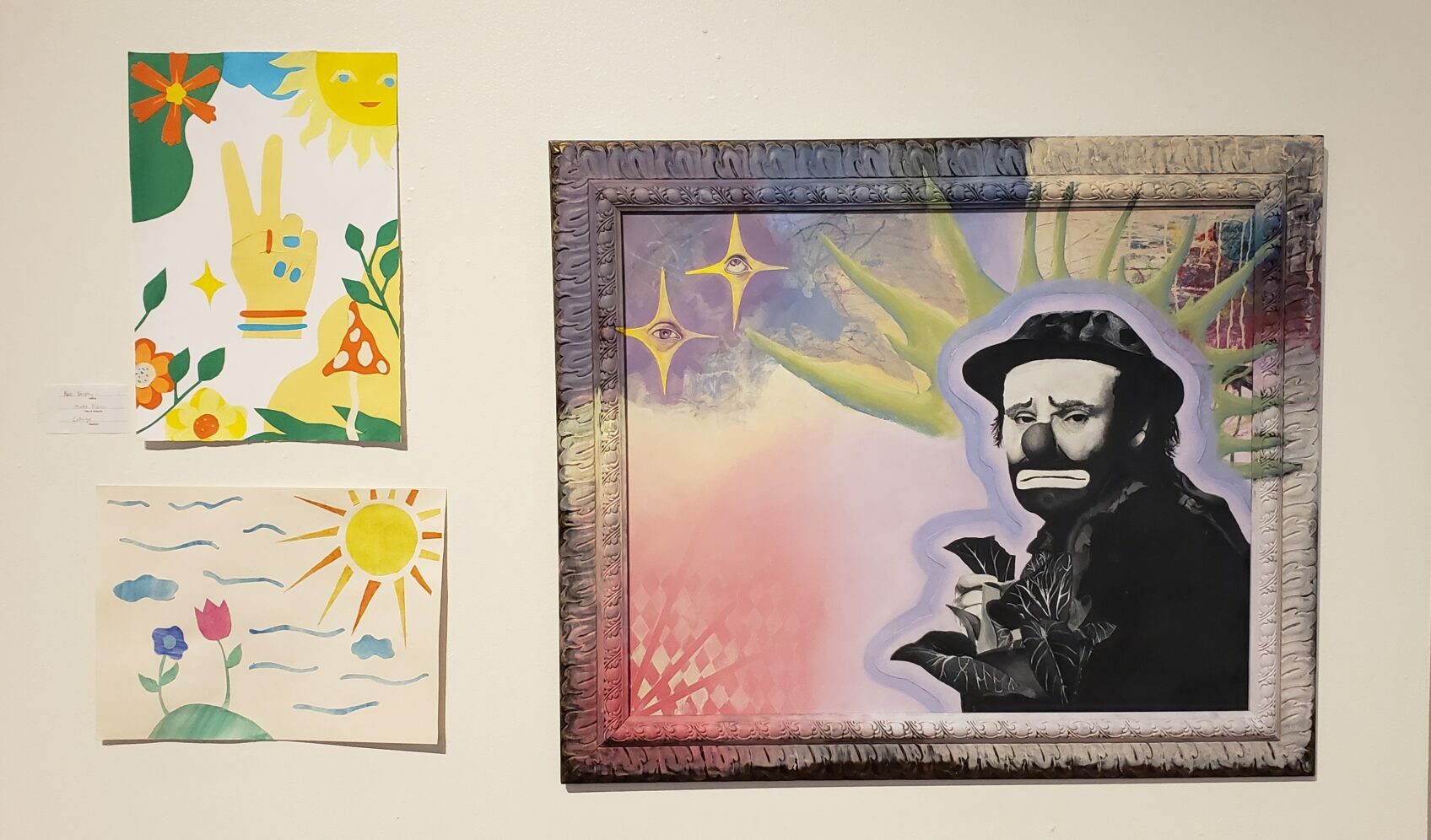
From Jacksonville, Oregon, Vance DeBar "Pinto" Colvig (1892-1967) will enroll at OAC, play in the band, draw cartoons for the school yearbook, stay until 1912, and then leave Corvallis to become a vaudeville actor, legendary professional clown, and one of the greatest voice-over entertainers in American history. The voice of "Goofy" and numerous other cartoon characters for the Disney Corporation, he is also credited with composing the children's song, "Who's Afraid of the Big Bad Wolf." He provided the voices for "Sleepy" and "Grumpy" in the movie, Snow White and the Seven Dwarfs. His voice is also heard as one of the Munchkins in the Wizard of Oz. Soon after World War II, he became the first Bozo the Clown, a role that would land him in the Clown Hall of Fame in 2004. |
|
1910
Paving of city streets in Corvallis begins. |
|
1910
Between 1910 and 1920, the population of Corvallis grows by 26 percent. |
|
1910
Corvallis population: 4,552; Benton County: 10,663; state of Oregon: 672,765. |
|
1910
During the first 10 years of the twentieth century, the population of Corvallis increases by 150 percent, to 4,552 residents of all ages. |
|
1910-1911
The Hotel Corvallis is extensively remodeled; a distinctive corner tower is removed, and another story is added. The hotel is renamed the Julian Hotel for owner Julian McFadden. |
|
1911
Buxton's Mill suffers a devastating fire and is rebuilt. |
|
1911
Built in 1911, the Corvallis and Philomath Garage, also known as Hathaway's Garage, was the second building erected in Corvallis specifically to sell and repair automobiles. The two-story building, located at 341 SW 2nd Street, was constructed of poured cement with a pebble dash front. |
|
1911
The old Corvallis Hotel at the southeast corner of Second and Monroe streets is expanded and reopened as the Julian Hotel, named for its owner Julian McFadden, who had purchased the older business in 1907. |
|
1911
Anna Zou Crayne is appointed as OAC's first Dean of Women. |
|
1911
The Washington Avenue railroad spur, which leads to the riverfront, is removed. |
|
1912
The bond election for the Van Buren Street bridge is the first in which women can vote after the statewide suffrage amendment passed earlier. Mrs. Gun Hodes casts the first ballot. |
|
1912
The Oregon Electric Company begins railroad service from Portland to Corvallis. Track for the OEC runs parallel to the main line of the Southern Pacific, but on the east side of the Willamette River, across property that is on the western boundary of the Trysting Tree Golf Course. |
|
1912
OAC has approximately 2,800 students enrolled in all programs. |
|
1912
Corvallis boasts the largest hopyard in the Willamette Valley, located just to the south of the Crystal Lake Cemetery. In 1929, it will be owned by the Seavy family. Other hopyards are located north of town, including the Butler Hopyard and the McFadden (family) Hopyards. |
|
1912
Boy Scouts and Campfire Girls are established in Benton County. |
|
1912
The Philomath State Bank, incorporated in 1911, constructed "a reinforced concrete building suited to banking purposes" at 1301 Main Street. The historic structure now houses The Wine Vault. |
|
1912
The Prather-Alcorn-Miller Machine Shop, located on the northeast corner of Second and Adams, is completed in the fall of 1912. The building is constructed of concrete blocks manufactured by the Concrete Construction Company. This machine shop, which included a turntable for servicing automobiles, replaced a blacksmith shop in this location after automobile owners began bringing their cars to the blacksmith shop for repairs. |
|
1912
A bridge is built over the Willamette River at Corvallis. It was completed in 1913. |
|
1912
A Memorial Bell in memory of George P. Wrenn is placed near the fire station at the corner of Fourth and Madison Streets by the Corvallis Fire Department and the Ladies Coffee Club. Wrenn, a fireman, died in a warehouse fire on February 25, 1882. |
|
1912
Susan Beeson Taylor is elected Benton County Treasurer. She is the first woman elected to public office in Benton County. |
|
1912
Alpine Post Office is established at Alpine, Oregon. |
|
1912
A brochure touts the virtues of settling in the mid-Willamette Valley, and claims, "Corvallis has more phones per capita than any town its size in the U.S." |
|
1913
The first bridge across the Willamette River in the vicinity of Corvallis opens for traffic. It replaces a ferry that had operated since the first settlers arrived in the area. |
|
1913
The Majestic Theater opens in Corvallis, Oregon. |
|
1913
Ohio native Jess A. Hanson (1887-1978) arrives in Benton County and begins a poultry breeding business on a 30-acre farm just to the west of the OAC campus. His farm will eventually expand to 350 acres and Hanson will become the world's pre-eminent breeder of White Leghorn chickens for egg production. Over the next 20 years Hanson's Leghorns will win over 100 national and international contests for egg-laying and set 21 world records. |
|
1913
The stadium that will later be known as Bell Field, which will be the home of OSU football until the construction of Parker Stadium in the early 1950s, is constructed on the site where today's Dixon Student Recreational Center is located. (See also 1907 and 1921) |
|
1913
County Judge Victor Moses orders that the grey concrete exterior walls of the Courthouse be painted "whiter than snow." |
|
1914
4-H Club work begins in Benton County, Oregon. |
|
1914
James Withycombe, a professor of agriculture at Oregon Agricultural College and director of the Oregon Experiment Station, is elected governor by the largest plurality ever given a candidate for the state's highest office up to that point. A member of the Republican Party, Withycombe was born in Tavistock, England, in 1854, and moved to a farm in Hillsboro when he was 17. His first term began in January 1915. At the time of the election he was a resident of Corvallis. (See also 1918, 1919) |
|
1914
The County bows to the presence of women in the Courthouse by adding a restroom for them. |
|
1914
Corvallis residents see their first airplane. |
|
1914
OAC receives acclaim as "Lady McDuff," a White Leghorn chicken under the care of faculty members in the college's poultry department, becomes the first chicken in the world to lay more than 300 eggs in one year (303 total). |
|
1915
Footballer Herman "Abe" Abraham becomes OSU's first consensus All-American in any sport. |
|
1915
Oregon State puts West Coast football on the map with a 20-0 upset win over Michigan State in East Lansing. The result stuns the nation and moves legendary sportswriter Grantland Rice of the New York Tribune newspaper to pen the famous poem he calls "The Pacific Slump." |
|
1915
Lewisburg supports enough activity to be classified as a village. In addition to the Mountain View Grange hall, the small rustic community features an elementary school, a high school, a church, and a State Game Farm, and is a lively farm center. |
|
1915
Land that had belonged to Corvallis town-founder J.C. Avery is purchased for conversion to a city park. The property includes Avery's house. |
|
1915
OAC becomes a founding member of the Pacific Coast Athletic Conference, one day to become the Pac-10. The other charter members are the University of Oregon, the University of California, and the University of Washington. |
|
1916
J.C. Avery's house burns to the ground. The only surviving structures are two brick chimneys, 10 feet apart. |
|
1916
The Airdome, an outside theater, opens in the location that will eventually house the Whiteside Theatre. |
|
1917
OSU's alma mater, "Carry Me Back," is written by W. Homer Maris, a University of Oregon graduate who receives his M.S. degree from OAC in 1918. It is officially adopted by the college in 1919. |
|
1917
The Reserve Officers' Training Corps (ROTC) is first established at OAC. |
|
1917
The Oregon state legislature enacts a law providing for the creation of a state highway commission and authorizes it to construct and maintain a system of modern highways throughout the state. This relieves Benton and every other Oregon county from a responsibility they had assumed since the early days of pioneer settlement of the Pacific Northwest. |
|
1918
The 50th anniversary of Oregon Agricultural College as a state institution of higher education. Enrollment is 1,668, under the supervision of 160 teaching and research staff. |
|
1918
James Withycombe, former professor of agriculture at OAC, is re-elected Republican governor of the state. (See also 1914, 1919) |
|
1918
Corvallis General Hospital is built. |
|
1918
By the end of the year, OAC has nearly 2,000 students, alumni, and faculty enlisted in the military and fighting in World War I. |
|
1919
Steamboat traffic stops servicing Benton County, Oregon. |
|
1919
Governor James Withycombe dies at home on March 3. Secretary of State Ben Olcott automatically becomes governor. (See also 1914, 1918) |
|
|